
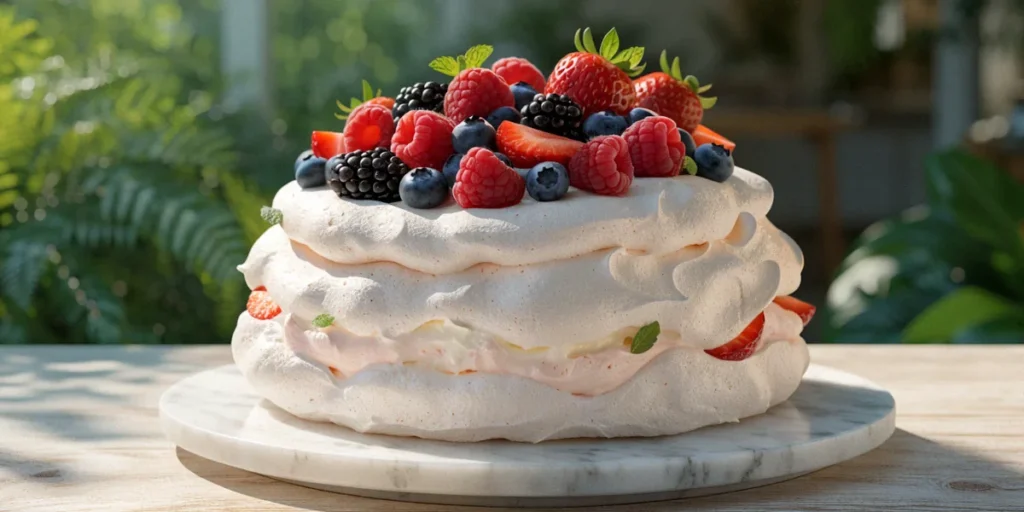
Pavlova for an Aussie Christmas: A Crisp Shell and a Soft Centre
It’s midday on Christmas Day in Australia. The prawns have been peeled, the ham is glistening, and the backyard table is crowded with salads wilting gently in the heat. Then someone carries out the pavlova — a cloud of crisp white meringue, whipped cream piled high, and a tumble of mango, passionfruit and strawberries. Everyone goes quiet for a second. Why does this dessert feel so essential to our festive season? Because pavlova is summer on a plate, and no Australian Christmas lunch is quite complete without one.
Why Pavlova Belongs on Every Aussie Christmas Table
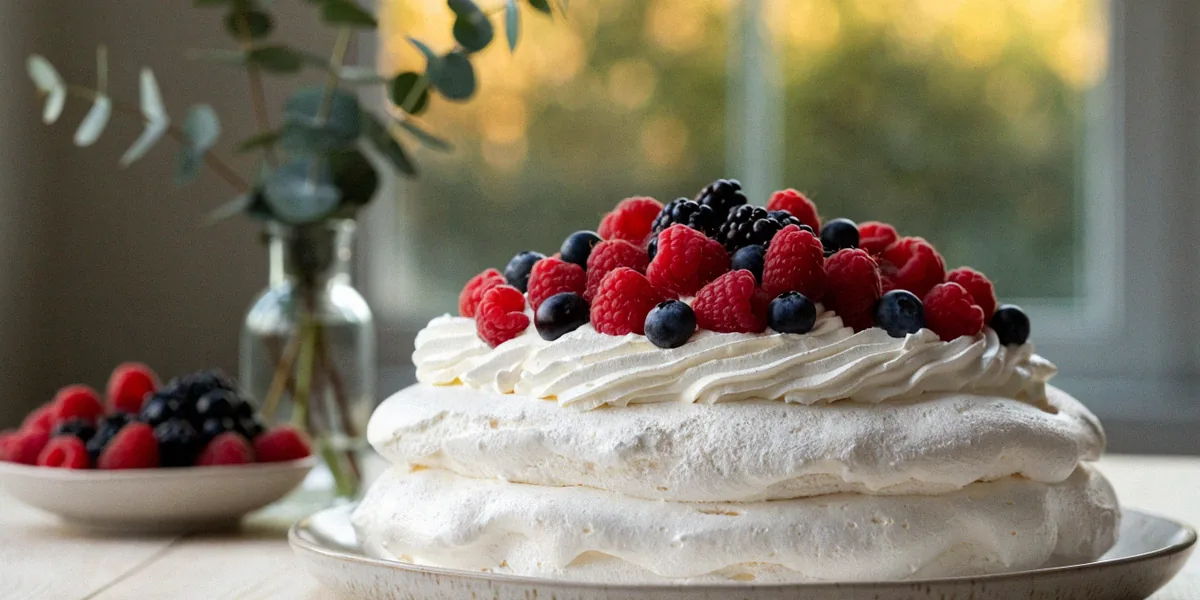
Pavlova is a meringue-based dessert with a crisp shell and a soft, marshmallow-like centre, named after Russian ballerina Anna Pavlova. In Australia, it’s less a recipe and more a ritual — the dish that signals the end of Christmas lunch and the start of an afternoon on the verandah. It suits our climate beautifully: light, fruit-topped and refreshing when the temperature nudges 35°C.
It’s also naturally gluten-free, which makes it wonderfully inclusive. At a gathering where someone is coeliac, or where dietary needs vary, the pavlova is the one dessert almost everyone can share. That’s part of its quiet genius.
A Brief History of the Pavlova
The dessert emerged in the 1920s, inspired by the ballerina’s famous tours of Australia and New Zealand. Chefs in both countries created a meringue dish light enough to evoke her grace, and the name stuck. By the mid-twentieth century, pavlova had become a fixture in Australian cookbooks and community fundraising recipe collections, often baked for fetes and family celebrations. Over time it shifted from special occasion to Christmas essential.
Pavlova vs. New Zealand: The Friendly Debate
A friendly rivalry exists between Australia and New Zealand over the pavlova’s origin, with both countries claiming it as their own. New Zealanders point to a 1927 recipe; Australians cite earlier meringue cakes and the dessert’s rise in our cookbooks. We think the debate is half the fun — and either way, we all win. Bring it up at Christmas lunch if you want a lively twenty minutes.
The Science of a Perfect Pavlova: Crisp Shell, Soft Centre
Pavlova is simple, but it isn’t forgiving. The good news is that once you understand a few principles, it becomes reliable.
Key Ingredients and Their Roles
- Egg whites, at room temperature: they whip to greater volume and hold air more steadily than cold whites.
- Caster sugar: fine crystals dissolve quickly, giving a smooth, stable meringue. We use CSR sugar, a pantry staple in Australian kitchens.
- Cornflour: helps create that soft, marshmallow centre.
- Vinegar (or lemon juice): stabilises the meringue and keeps the interior tender.
- Whipped cream: Bulla cream is a favourite for whipping — thick, rich and reliable.
Temperature and Timing: The Low-and-Slow Method
A low oven is essential. We bake pavlova at around 120°C for roughly 1 hour to 1 hour 15 minutes, then leave it to cool completely in the oven with the door ajar. This slow cooling prevents sudden temperature changes that cause cracking. Humidity can affect pavlova’s texture, so it’s best to bake on a dry day — if it’s raining in Melbourne or Brisbane, save the pavlova for another day.
Step-by-Step: Our Team’s Go-To Pavlova Recipe
This is the version we come back to every December. It serves 8 to 10 people generously.
Ingredients:
- 6 egg whites, at room temperature
- 1½ cups (330g) caster sugar
- 2 tsp cornflour
- 1 tsp white vinegar
- 1 tsp vanilla extract
- 300ml thickened cream, whipped
- Fresh fruit, to serve
Mixing and Shaping the Meringue
- Preheat the oven to 120°C (fan-forced 100°C). Line a baking tray with baking paper and draw a 22cm circle on it.
- In a stand mixer or with hand beaters, whisk the egg whites on medium until soft peaks form.
- Add the sugar one tablespoon at a time, beating well between additions, until the mixture is thick and glossy and the sugar has dissolved.
- Fold through the cornflour, vinegar and vanilla with a spatula.
- Spoon the meringue onto the circle, shaping it into a disc with a slight dip in the centre and a softly swirled edge.
Baking and Cooling: Patience Pays Off
Bake for 1 hour to 1 hour 15 minutes, until the shell is dry and firm to the touch. Turn the oven off, prop the door open slightly with a wooden spoon, and leave the pavlova inside until completely cool — at least 2 hours, ideally longer. This is where the crisp shell and soft centre are locked in.
Toppings That Celebrate Australian Summer
The topping is where you can really make it yours. Think colour and contrast: something tart against the sweet cream and meringue.
Classic Cream and Fruit Combinations
- Strawberries and cream — the timeless pairing
- Passionfruit pulp drizzled generously over whipped cream
- Sliced mango, kiwi and berries for a tropical edge
- A mix of raspberries and blueberries for a bright, jewel-like finish
Modern Twists: Chocolate, Nuts, and More
We love a chocolate pavlova — fold cocoa through the meringue and finish with grated dark chocolate. Toasted pistachios or macadamias add crunch. A swirl of lemon curd or a spoonful of mango coulis works beautifully too. Just keep the fruit fresh and add it right before serving so the shell stays crisp.
Troubleshooting Common Pavlova Problems
Humid Australian Christmases can be tricky, so a little planning goes a long way.
Why Did My Pavlova Crack?
Cracking usually comes from cooling too quickly or from a sudden temperature change. Leaving it in the oven to cool slowly is the best prevention. A few cracks are fine — that’s what cream and fruit are for.
How to Prevent Weeping and Sogginess
Weeping — the syrupy droplets on the surface — happens when the sugar hasn’t fully dissolved. Beat the sugar in gradually and make sure the meringue feels smooth between your fingers. Add cream and fruit only just before serving, and store any leftovers in an airtight container in the fridge.
Make-Ahead Tips and Storage for a Stress-Free Christmas
Christmas Day is busy enough. The good news is that pavlova is a natural make-ahead dessert.
Preparing the Base in Advance
Bake the shell a day or two ahead and store it in a cool, dry place — not the fridge, where moisture will soften it. A clean cake tin or an airtight container lined with baking paper works well.
Assembling and Serving on the Day
Whip the cream and prepare the fruit shortly before serving. Assemble the pavlova at the last moment to keep the shell crisp. Leftover pavlova can be enjoyed the next day, though it will soften — we think it’s still delicious, especially with a spoon straight from the container.
FAQ
Can I make pavlova the day before?
Yes — bake the shell a day or two ahead and store it in a cool, dry place. Add cream and fruit just before serving.
Why does my pavlova weep?
Weeping usually means the sugar wasn’t fully dissolved. Add caster sugar gradually and beat until the meringue is smooth and glossy.
Is pavlova gluten-free?
Yes, traditional pavlova made with egg whites, sugar, cornflour and vinegar is naturally gluten-free, making it a great choice for mixed gatherings.
Can I use cold egg whites?
Room-temperature egg whites whip up better, so let them sit out for 30 minutes before you start.
What cream is best for pavlova?
Thickened cream whips beautifully. We often reach for Bulla cream for a rich, stable result.
Pavlova is more than a dessert — it’s a symbol of Australian summer celebrations, from backyard lunches to beachside Boxing Day gatherings. Start with a reliable base, pile on the season’s best fruit, and make it your own. A little practice, and it’ll become the dish everyone asks you to bring.