
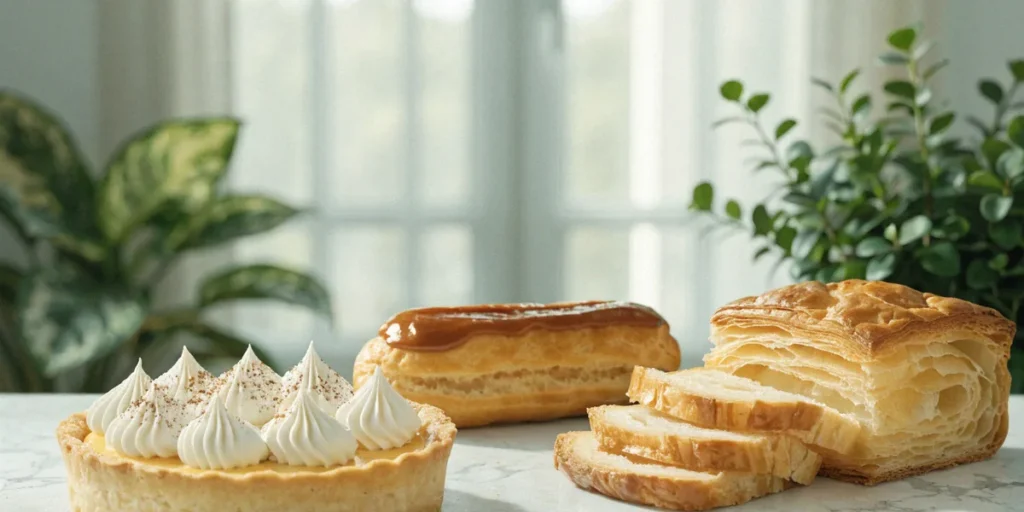
Pastry Basics: Shortcrust, Choux and Puff Explained
Last weekend, our team stood in a home kitchen in Melbourne’s inner north watching a shortcrust shell shrink away from the tart tin like it was trying to escape, while a tray of choux buns sat collapsed and deflated beside it. We have all been there. Pastry has a reputation for being fussy, temperamental and reserved for white-aproned professionals, but the truth is that almost every pastry in the Australian baking repertoire belongs to just three families: shortcrust, choux and puff. Once you understand what each one is doing and why, the shrinking, the collapsing and the soggy bottoms start to make sense. This is our no-nonsense guide to the three pastry basics every Australian home baker should know.
Why These Three Pastries Matter in Australian Baking
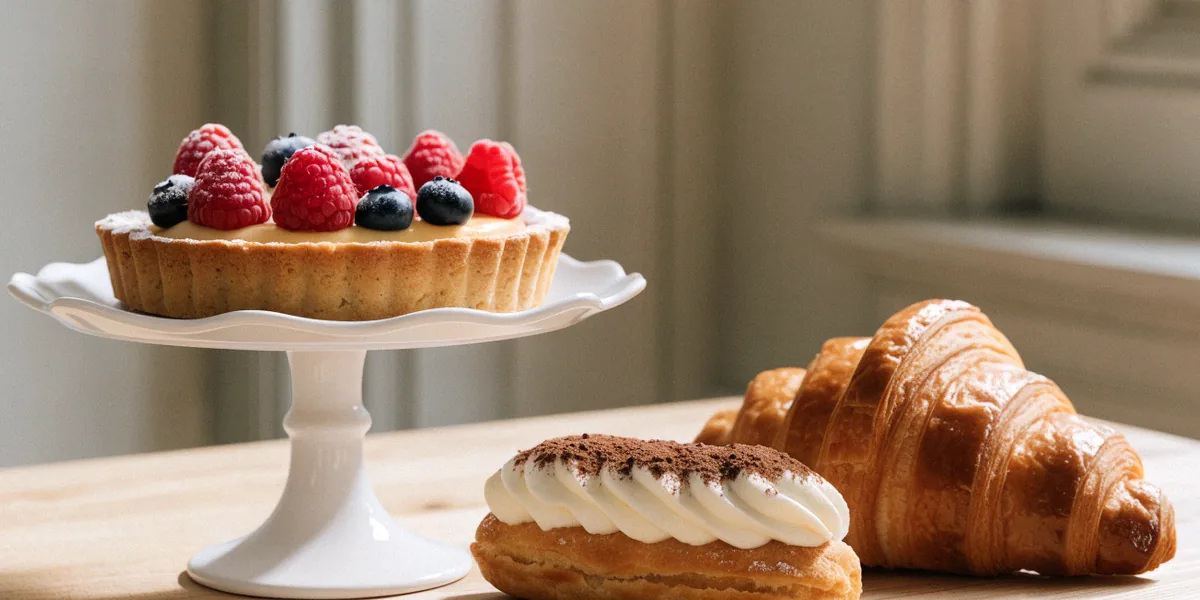
Think about the desserts and baked goods that show up at every Australian table, bakery and footy club fundraiser. The vanilla slice at the local cake shop is built on puff. The cream puffs and éclairs in a patisserie cabinet are choux. The meat pie, the quiche, the jam tart and the lemon tart all rest on shortcrust. Even the humble lamington, with its sponge and coconut coating, sits alongside a whole tradition of Australian baking where texture and structure do the heavy lifting.
In Melbourne, patisseries like LuxBite and Beatrix are known for choux and puff-based desserts that showcase these techniques daily. Their cabinets are essentially a masterclass in what happens when butter, flour and water are handled with precision. You do not need a commercial kitchen to get close. You need to understand ratios, temperature and timing.
The role of butter and flour ratios
Every pastry family is defined by how much fat it contains and how that fat is incorporated. Shortcrust sits around a 1:2 fat-to-flour ratio, which coats the flour proteins and limits gluten development, giving a crumbly, tender result. Choux uses a high-fat, high-liquid panade that relies on steam for lift rather than flaky layers. Puff takes the opposite approach, using a relatively lean dough wrapped around a large block of butter, then folded repeatedly to create hundreds of thin alternating layers.
Get the ratio wrong and the pastry tells you immediately. Too much fat in shortcrust and it will not hold together. Too little butter in puff and the layers will not separate.
How Australian humidity affects pastry
Australian humidity is the quiet saboteur of home baking. On a humid day in Queensland or coastal New South Wales, flour absorbs moisture from the air, butter softens faster, and puff pastry becomes sticky and unworkable. In dry Victorian heat, doughs can dry out and crack before they reach the oven. Our rule of thumb is simple: chill everything, work quickly, and if the dough starts to feel greasy, stop and put it back in the fridge for fifteen minutes.
Shortcrust Pastry: The Reliable Workhorse
If you only master one pastry, make it shortcrust. It is forgiving, versatile and the foundation of both sweet and savoury Australian baking.
Sweet shortcrust for tarts and pies
Sweet shortcrust, often called pâte sucrée, adds a small amount of sugar and sometimes an egg yolk to the mix. It is the pastry behind lemon tarts, fruit pies and the kind of elegant tart you might serve after a Sunday roast. Western Star butter is a widely used Australian brand for shortcrust pastry, and its consistent fat content makes it a reliable choice for home bakers. The texture we are aiming for is short and crumbly, not flaky — think of the snap you get from a good Anzac biscuit, which is a classic Australian baked good often associated with shortcrust-style textures.
Savoury shortcrust for meat pies and quiches
Savoury shortcrust drops the sugar and sometimes uses a mix of butter and lard or shortening for extra robustness. It needs to hold a wet filling without turning to mush, which is why blind baking matters so much. This is the pastry for meat pies, quiches, savoury tarts and the kind of picnic slice that travels well.
Resting and blind baking tips
Resting is not optional. After you bring the dough together, flatten it into a disc, wrap it and chill it for at least thirty minutes. This relaxes the gluten and stops the shrinkage that plagues so many home bakers. For blind baking:
- Line the chilled pastry with baking paper and fill with rice, dried beans or ceramic weights.
- Bake at 190°C for 15 minutes, then remove the weights and paper.
- Return to the oven for 5–10 minutes if the filling is wet, or brush with egg white to seal the base.
The rubbing-in method is the classic technique here: use your fingertips to rub cold, cubed butter into the flour until it resembles breadcrumbs, then add just enough iced water to bring it together. Handle it as little as possible.
Choux Pastry: Light, Airy and a Little Dramatic
Choux is the show-off of the pastry world. It puffs dramatically in the oven, hollows out inside, and then waits to be filled with cream. Melbourne patisserie institutions like Laurent and Ganache Chocolate rely on precise choux for their dessert cabinets, and once you nail the method, you will understand why.
Making and drying the panade
Choux starts with a panade: water, butter and flour cooked together in a saucepan until the mixture pulls away from the sides and forms a smooth ball. The key step most home bakers skip is drying. Keep the panade over low heat for another minute or two, stirring constantly, to drive off excess moisture. A dry panade means a dough that will rise properly rather than steam out and collapse.
Piping and baking for consistent puffs
Once the panade has cooled slightly, beat in eggs one at a time until the dough is glossy and holds a soft peak. Pipe rounds or logs onto a lined tray, smooth the tops with a wet finger, and bake at a high temperature to start the rise, then drop the heat to dry the interiors. Do not open the oven door during the first twenty minutes. Choux is dramatic, but it is also easily offended.
Filling ideas: crème pâtissière and Chantilly cream
Crème pâtissière is the classic vanilla custard filling, thickened with cornflour and egg yolks. Chantilly cream is lightly sweetened whipped cream with a touch of vanilla. For éclairs, pipe crème pâtissière into the cooled shells. For profiteroles, split and fill with Chantilly cream, then drizzle with chocolate. Both are staples of the Australian dessert table.
Puff Pastry: Layers, Lamination and Patience
Puff pastry is the most technically demanding of the three, but it is also the most rewarding when you cut into a golden, flaky sausage roll and see the layers. The process is called lamination, and it involves two components: the détrempe (the dough) and the beurrage (the butter block).
Full puff vs rough puff
Full puff involves wrapping a block of butter in dough and completing six folds, resulting in hundreds of distinct layers. Rough puff, sometimes called blitz puff, uses chilled grated or cubed butter tossed through the flour before rolling and folding. Rough puff is faster and more forgiving, and for most home bakers it delivers a result that is close enough to full puff for sausage rolls and palmiers.
Folding and chilling techniques
The rhythm of puff is fold, chill, fold, chill. Every fold needs a rest in the fridge so the butter stays firm and the gluten relaxes. If the butter starts to soften or leak through the dough, stop immediately and chill. Warm butter is the enemy of flaky layers.
Classic Australian uses: sausage rolls and palmiers
Sausage rolls are the great Australian puff pastry application, followed closely by palmiers, the sweet, crunchy biscuits made from rolled puff and sugar. Coles and Woolworths stock frozen puff pastry blocks and sheets across Australia, and for weeknight baking they are genuinely excellent. Use store-bought when time is short, and make your own when you want the satisfaction of watching the layers rise.
Troubleshooting and Our Team’s Top Tips
Every pastry problem has a cause, and most of them come back to temperature. Here are the fixes we reach for most often, especially on hot, humid days in Queensland and Victoria.
Fixing shortcrust shrinkage and soggy bases
Shrinkage usually means the gluten was not relaxed enough. Chill the dough for at least thirty minutes before rolling, and again after lining the tin. Soggy bases come from under-baking or from wet fillings seeping into the pastry. Blind bake fully, brush the base with egg white or melted chocolate, and do not pour a hot filling into a cold shell.
Rescuing collapsed choux
Collapsed choux almost always means the dough was too wet or the oven was opened too early. If your choux has deflated, you cannot re-inflate it, but you can salvage it by slicing the tops off, filling the bases, and serving them as open-faced cream buns. Next time, dry the panade longer and resist the urge to peek.
Keeping puff pastry flaky in warm weather
Work on a cold surface, use a chilled rolling pin, and return the dough to the fridge the moment it feels soft. On a 35°C day, we sometimes laminate in short bursts of ten minutes, chilling between every fold. It takes longer, but the layers survive.
Frequently Asked Questions
Can I use the same pastry for both sweet and savoury baking?
Shortcrust is the most adaptable. A basic shortcrust with a pinch of sugar works for both, though sweet tarts benefit from a little extra sugar and savoury pies from a touch of salt. Choux and puff are neutral, so they work in both contexts too.
Why does my shortcrust crack when I roll it out?
Cracking usually means the dough is too cold or too dry. Let it sit at room temperature for five minutes, then press the edges together and roll gently. If it is still crumbly, add a teaspoon of iced water.
Do I really need to rest puff pastry between folds?
Yes. Resting chills the butter and relaxes the gluten, which is what allows the layers to separate cleanly in the oven. Skipping the rest gives you a tough, greasy pastry.
How do I know when choux is baked enough?
The shells should be deep golden brown, feel light for their size, and sound hollow when tapped on the base. If they are pale, they will collapse once they cool.
Is store-bought puff pastry as good as homemade?
For weeknight baking, absolutely. Coles and Woolworths frozen puff pastry is reliable, buttery and consistent. Homemade puff has more flavour and a more dramatic rise, so it is worth trying at least once.
Mastering shortcrust, choux and puff opens the door to confident Australian home baking, from meat pies and vanilla slices to éclairs and palmiers. Start with shortcrust, because it teaches you the fundamentals of fat, flour and temperature without punishing small mistakes. Once you can blind bake a tart shell without shrinkage, move on to choux, then tackle puff when you have a cool day and a little patience. The three families are simpler than they look, and once you know them, the patisserie cabinet stops feeling like a mystery.