
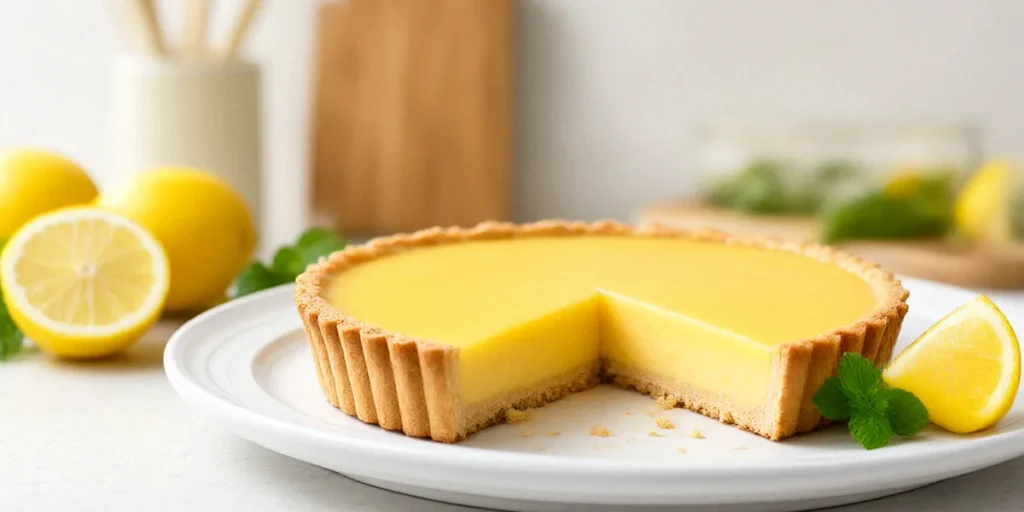
Lemon Tart: Getting the Set Right
You pull a lemon tart from the fridge, glossy and golden, and the surface looks immaculate. Then the knife goes in, the first slice slides onto the plate, and the filling slumps into a runny puddle. We have all been there, and it is genuinely maddening because the tart looked done. The good news is that a lemon tart that sets cleanly is not luck or instinct. It comes down to measurable things: the ratio of egg to yolk, the weight of your lemon juice, the temperature you cook the curd to, and how long you chill it. This is the test-kitchen method we use, with the numbers that make it repeatable in an Australian home kitchen.
Why Lemon Tart Set Goes Wrong
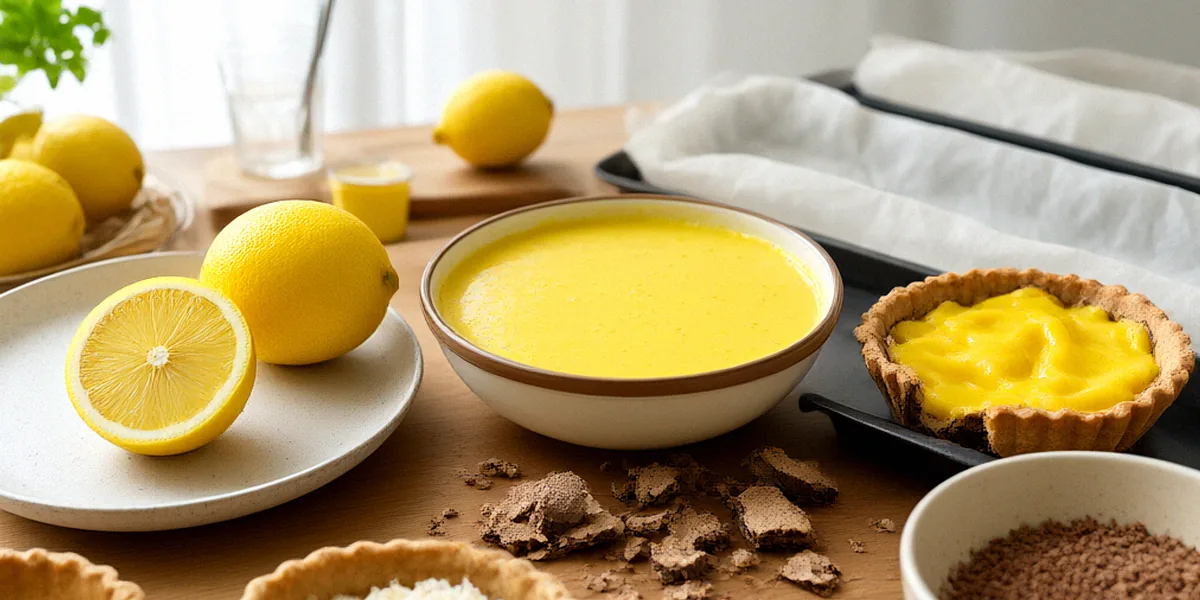
A lemon tart filling is a curd, and a curd sets because egg proteins coagulate as they heat. That coagulation is affected by everything else in the bowl: sugar raises the temperature at which the proteins set, acid from lemon juice encourages them to set earlier and more tightly, extra yolks add richness and body, and starch changes the whole texture. Most runny tarts are not a recipe problem so much as a cooking and measurement problem. Under-cooking is the single biggest cause, followed by too much liquid in the mix, whether that is juice, water clinging to the zest, or a loose egg. Australian lemons add another variable, because the same variety can give wildly different juice yields across the year.
The Role of Eggs and Yolks
Whole eggs give structure and set; yolks give richness, colour, and a silkier mouthfeel. A filling made from yolks alone is luscious but can be slow to firm and prone to a slightly rubbery edge if pushed too far. Whole eggs alone set more reliably but taste leaner. Our formula uses both: four whole eggs for dependable structure, plus two extra yolks for body and gloss. If you swap in more yolks, expect a softer set and be prepared to cook a degree or two further, and if you cut the yolks entirely, expect a firmer, more jelly-like slice.
Acidity and Juice Yield in Australian Lemons
This is where a lot of home bakers get caught out. Australian lemons often yield more juice in winter and less in summer, so the same “three lemons” instruction can give you 90 ml in February and 160 ml in July. More juice means more liquid and more acid, both of which change how the curd sets and tastes. Weigh your juice rather than counting lemons, and taste it. If your lemons are particularly sharp, you may want to pull back slightly or add a little more sugar, but keep the juice weight consistent so the set stays predictable.
Starch vs. No Starch
Some recipes add cornflour or a little custard powder to guarantee a firm slice. Starch does make a tart almost foolproof, and it helps a tart survive a warm day. The trade-off is texture: starch-thickened fillings can taste slightly pasty and lose that clean, bright curd flavour. We prefer a starch-free curd cooked to temperature, because it gives the cleanest flavour and the most elegant set. If you are nervous or baking for a hot outdoor lunch, a teaspoon of cornflour whisked into the sugar is a reasonable insurance policy, but it is not necessary when the temperature is right.
Our Test-Kitchen Lemon Tart Formula
This is the ratio we come back to for a 23 cm tart. It is balanced, forgiving, and sets reliably without starch.
- 4 whole eggs
- 2 extra egg yolks
- 150 g caster sugar
- 150 ml freshly squeezed lemon juice, weighed
- Zest of 2 lemons
- 60 g cold unsalted butter, cubed
Ingredient Ratios That Work
The 150 g sugar to 150 ml juice to 6 eggs (four whole plus two yolks) ratio is the backbone. Sugar is not just sweetness here; it controls how aggressively the proteins set, so cutting it dramatically will give you a firmer, less balanced curd. We use caster sugar because it dissolves quickly and evenly. Weigh everything, including the juice. A 5 ml difference will not ruin your tart, but a 30 ml difference absolutely will.
Cooking to Temperature, Not Time
We cook the filling in a heatproof bowl over a saucepan of barely simmering water, whisking constantly, and we use a digital thermometer. Cook the lemon filling to 82°C for a reliable set. At that point the curd thickens, coats the whisk, and holds a faint trail. Timing is useless here because it depends on your bowl, your water level, and how cold your eggs were. The thermometer is the only honest guide. If you overshoot past about 85°C, you risk scrambling or graininess.
When to Add Butter
Pull the bowl off the heat at 82°C, then add the cold cubed butter and stir gently until it melts and disappears. The butter emulsifies into the curd and gives that glossy, rich finish. Stir gently rather than whisking hard. Over-whisking after adding butter can cause graininess, because you are encouraging the fat to separate rather than blend. A slow, patient stir with a spatula is all it needs.
Blind Baking the Shell for a Crisp Base
A runny filling is a tragedy, but a soggy base is a quiet disappointment. The shell needs to be fully baked and sealed before the wet filling ever touches it. We use a 23 cm fluted metal tart tin, because metal conducts heat far better than ceramic and gives you a crisper, more evenly browned base. If you only own ceramic, add a few minutes to the blind bake and expect a slightly softer crust.
Dough Resting and Rolling
Make your sweet shortcrust and rest it in the fridge for at least 30 minutes, ideally an hour. Resting relaxes the gluten so the pastry does not shrink down the sides of the tin. Roll it to about 3 mm thick, lift it carefully over the tin, and press it into the flutes without stretching. Trim the excess, then prick the base all over with a fork. Freeze the lined tin for 20 minutes before baking, which sets the butter and further reduces shrinkage.
Weights and Baking Times
Line the frozen shell with baking paper and fill with rice, baking beads, or dried beans. Blind bake at 180°C fan-forced for about 20 minutes, then remove the weights and paper and bake for a further 8 to 12 minutes until the base is dry and pale golden. Keep an eye on the edges, which catch quickly. If the rim is browning too fast, tent it loosely with foil.
Sealing the Base
For extra protection, brush the warm base with a little beaten egg white or melted white chocolate and return it to the oven for 2 minutes to set. This creates a thin moisture barrier so the filling cannot seep into the pastry. It is a small step that makes a real difference to how the tart holds up over three days in the fridge.
Filling, Baking, and Setting the Tart
With the shell baked and the curd warm, you are close. Pour the warm filling into the blind-baked shell while it is still fluid, then bake briefly to just set the outside. The centre should remain slightly soft when it comes out, because it will continue to firm as it cools.
Pouring and Smoothing the Filling
Pour the curd through a fine sieve if you want an impeccably smooth surface and to catch any stray cooked egg. Fill the shell almost to the rim, then smooth the top with an offset spatula. Give the tin a gentle tap on the bench to release any air bubbles, then slide it onto a baking tray.
The Wobble Test
Bake at 140°C fan-forced for 20 to 25 minutes until the centre wobbles slightly when you nudge the tray. A gentle, uniform wobble is what you want; a liquid slosh means more time, and a completely still centre means you have gone too far. If the surface puffs at all, pull it out immediately.
Cooling and Chilling
Cool the tart completely at room temperature, which lets the proteins finish setting gently without cracking. Then chill it in the fridge for at least 4 hours before slicing, and overnight is even better. Chilling firms the butter and curd together, giving you clean slices with sharp edges. Cutting a warm or barely cool tart is the most common reason a perfectly good filling looks runny on the plate.
Fixing a Runny or Grainy Lemon Tart
Mistakes happen, and most of them are recoverable. Here is how we handle the two most common problems.
Rescue Plan for Runny Filling
If your tart is already in the shell and still runny, scoop the filling back into a clean saucepan. Cook it gently over low heat, stirring constantly, until it reaches 82°C, then pour it back into the shell and chill again. If the tart is already fully assembled and set but weeping liquid, you can also return the whole tart to a 140°C oven for 5 to 8 minutes to firm the centre, though this risks the crust darkening.
Smoothing a Grainy Curd
Graininess usually means the curd got too hot too fast, or it was over-whisked after the butter went in. Blend it with a stick blender for 20 to 30 seconds, which breaks up the coagulated protein and brings the emulsion back together. Strain it through a fine sieve for a flawless finish. Next time, keep the heat low and stir rather than whisk once the butter is added.
Preventing Cracks
Cracks come from fast cooling, over-baking, or a filling that was too hot when it hit the shell. Cool the tart slowly at room temperature rather than moving it straight to the fridge, and do not open the oven door repeatedly during the bake. A hairline crack is easy to hide under a dusting of icing sugar or a spoonful of cream.
Serving and Storing Your Lemon Tart
A great lemon tart is as much about how you serve it as how you baked it. Temperature and accompaniment both change the experience dramatically.
Best Temperature to Serve
We recommend serving at cool room temperature for the best texture. Take the tart out of the fridge 20 to 30 minutes before slicing, so the curd softens just enough to feel silky rather than cold and stiff. Straight from the fridge it tastes muted; left out too long it turns slack.
Accompaniments We Love
A generous dollop of King Island cream is a rich Australian accompaniment that balances the tart’s acidity beautifully, and it is hard to beat. Crème fraîche does the same job with a little more tang. Fresh raspberries, a few mint leaves, or a light dusting of icing sugar are all you need beyond that.
Storage and Make-Ahead Tips
Store the tart covered in the fridge for up to 3 days. If the crust softens, refresh the whole tart in a low oven at 120°C for 8 to 10 minutes, then cool again before serving. The shell can be blind baked a day ahead and kept airtight at room temperature, and the curd can be made up to 2 days ahead and refrigerated, then warmed gently and poured into the shell before the final bake.
FAQ
Why is my lemon tart still runny after chilling overnight?
Almost always because the curd was not cooked hot enough. If it never reached 82°C, the egg proteins never fully coagulated, and chilling cannot fix that. Scoop the filling back into a saucepan, cook gently to 82°C while stirring, refill the shell, and chill for at least 4 hours.
Can I make a lemon tart without a thermometer?
You can, but it is guesswork. Without a thermometer, look for a curd thick enough to coat the back of a spatula and hold a clear line drawn through it. That visual cue usually corresponds to roughly 80 to 82°C, but a cheap digital thermometer removes the doubt for good.
How many lemons do I need for 150 ml of juice?
It varies enormously. Australian lemons often yield more juice in winter and less in summer, so weigh the juice rather than counting lemons. Buy four or five and juice them, then measure out exactly 150 ml.
Should I use a metal or ceramic tart tin?
We use a 23 cm fluted metal tart tin for better heat conduction than ceramic, which gives a crisper, more evenly baked base. Ceramic works, but add a few extra minutes to the blind bake and expect a slightly softer crust.
Can I freeze a lemon tart?
We do not recommend freezing an assembled tart, because the curd can weep and the pastry loses its snap on thawing. Bake and chill it fresh, or freeze the unbaked pastry shell and bake it from frozen when you need it.
Consistent set comes down to three habits: weigh your ingredients rather than eyeballing them, cook the curd to 82°C with a digital thermometer, and chill the finished tart for at least 4 hours before you slice it. Trust your thermometer over the clock, and your lemon tart will slice cleanly every single time.