
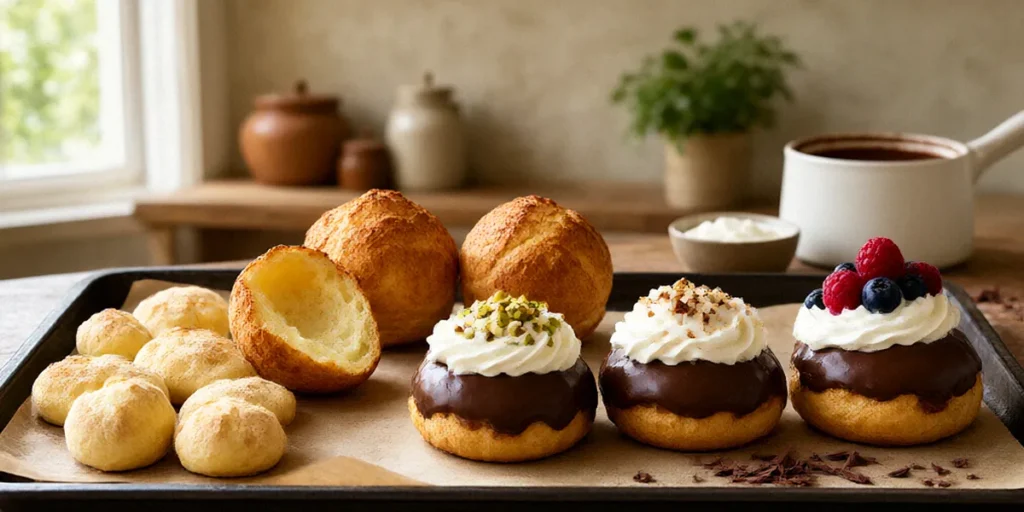
Choux Pastry Troubleshooting: Solving Common Problems
You’ve piped neat rows of glossy dough onto your tray, slid them into the oven, and watched through the glass as they puffed into proud golden spheres. Then you opened the door — and within minutes they collapsed into sad, flat discs. We’ve been there. Choux pastry is one of those techniques that humbles even experienced bakers, and the margin between triumph and disaster is genuinely small. The good news is that almost every choux failure has a traceable cause, and once you understand what’s happening inside the oven, you can fix it. Here’s how we troubleshoot choux pastry problems in our own kitchens, with adjustments built for Australian conditions.
Why Choux Pastry Goes Wrong: Understanding the Basics
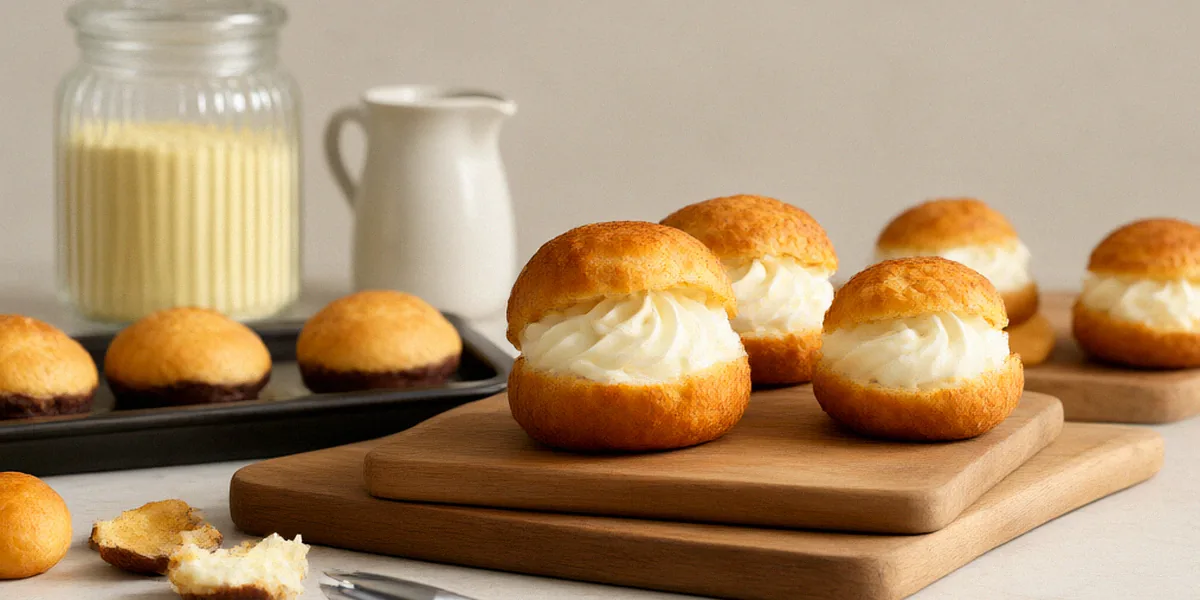
Choux is unlike any other pastry. There’s no flaky lamination, no yeast, no chemical leavener. The rise comes entirely from steam. When the wet dough hits a hot oven, the water inside turns to steam and forces the pastry outward, while the gluten network — developed when you beat flour into the butter and water mixture — stretches to hold that shape. The egg then sets the structure as it coagulates. If any one of those elements is off, the whole thing fails.
That means three things matter more than anything else: the ratio of liquid to flour, how much you dry out the dough on the stovetop, and how much egg you add. Get those right, and choux becomes almost predictable.
The Importance of Precise Measurements
We can’t overstate this: using a kitchen scale is crucial for precise measurements. A cup of flour can vary by 20 per cent or more depending on how it’s scooped, and choux dough is sensitive to that variation. Weigh everything in grams — flour, water, butter, eggs (crack them into a bowl and weigh them, don’t count them). A typical choux ratio we rely on is 100g water, 100g milk, 100g butter, 120g flour, and roughly 200g egg, adjusted as needed. If you’re still using cups, this is the single change that will improve your results fastest.
How Humidity Affects Choux in Australia
Australian humidity can affect choux pastry, so adjust liquid accordingly. On a muggy February day in Brisbane or Sydney, flour absorbs moisture from the air, meaning your dough may need slightly less egg to reach the right consistency. In dry Perth or Adelaide summers, the opposite is true — you might need an extra spoonful. Watch the dough, not the clock. The correct consistency is thick, glossy, and just holds a soft peak when you lift the paddle.
Common Choux Pastry Problems and How to Fix Them
Most choux issues fall into four categories. Here’s what causes each one and how we fix it.
Choux Pastry Deflates After Baking
Deflating almost always means the pastry wasn’t dried out enough inside. If you pull the buns from the oven too early, the internal structure is still soft and collapses as it cools. Causes include underbaking, opening the oven door too soon, or not drying the dough sufficiently on the stovetop. The fix: bake longer than feels comfortable — usually 30–35 minutes at 200°C, then drop to 170°C for another 10. Pierce the base of each bun with a small knife and return them to the oven for 5 minutes to release trapped steam.
Choux Pastry Cracks During Baking
Cracking happens when the outer shell sets before the inside has finished expanding, so the steam bursts through the surface. This is usually caused by an oven that’s too hot, dough that’s too stiff, or uneven piping. Lower your initial temperature to 190°C and extend the bake time. If you’re using a convection oven, drop the temperature by 15–20°C to compensate for the fan. Also make sure your dough isn’t over-thickened — if it’s resisting the piping bag, add a beaten egg a little at a time.
Choux Pastry Has Soggy Bottoms
Soggy bottoms come from moisture trapped underneath the bun. This can happen if you pipe onto a greased tray (use baking paper instead), if the buns cool on the tray, or if you fill them too far in advance. Always transfer baked choux to a wire rack immediately, and if you’re filling with cream, do it within an hour or two of serving. White Wings flour is a reliable Australian brand for choux pastry, and its consistent protein content helps produce a sturdy shell that resists sogginess better than lower-protein alternatives.
Choux Pastry Doesn’t Rise Properly
If your choux comes out flat and dense, the usual suspects are:
- Too much egg — the dough is too slack to hold steam
- Not enough egg — the dough is too stiff and can’t expand
- Oven temperature too low — the steam never generates enough force
- Dough not dried enough on the stove — excess water weakens the structure
- Opening the oven door during the first 20 minutes
Work through these one at a time and you’ll usually find the culprit within a batch or two.
Technique Tweaks for Perfect Choux
Once the basics are sorted, these refinements push your choux from acceptable to excellent.
Drying the Dough Properly
After the flour goes in, keep the mixture over low heat and stir constantly for 1–2 minutes. You’re looking for a film forming on the base of the pan and a dough that pulls away cleanly. This step evaporates excess water so you can control the egg quantity precisely.
Adding Eggs at the Right Temperature
Let the dough cool for 5–10 minutes before adding eggs. If it’s too hot, the eggs will scramble; if it’s stone cold, they won’t incorporate smoothly. Add beaten egg in three or four additions, mixing thoroughly each time. A stand mixer like a KitchenAid makes this effortless and gives you a consistent texture.
Piping Tips for Even Shapes
Use a plain 1.5cm nozzle, hold the bag vertically, and pipe with steady pressure. For éclairs, pipe 10cm lengths; for buns, pipe 4cm rounds. Smooth the tops with a damp fingertip and give each one space — they’ll double in size.
Baking Temperature and Time
We start at 200°C for 15 minutes to set the rise, then drop to 170°C for another 20–25 minutes to dry the interior. If you have a convection oven, use it — the even airflow produces more uniform results, just reduce the temperature by 15–20°C.
Troubleshooting Fillings and Assembly
A perfect shell can still be ruined by the wrong filling or bad timing.
Preventing Soggy Pastry After Filling
Fill choux just before serving. Cream and custard release moisture into the pastry within a couple of hours, turning a crisp shell soft. If you must prep ahead, bake the shells, store them airtight, and fill at the last minute.
Stabilising Whipped Cream
Plain whipped cream collapses quickly, especially in warm weather. Add a teaspoon of cornflour per cup of cream, or use a stabilised crème pâtissière. Pauls cream is a popular choice for fillings in Australia, and its consistent fat content whips reliably. For a richer alternative, a chocolate ganache made with 60 per cent dark chocolate and hot cream sets firm and won’t weep.
Choosing the Right Fillings
Match the filling to the shell. Craquelin-topped buns suit pastry cream; éclairs love ganache; profiteroles work best with ice cream served immediately. Avoid anything watery — fruit curds need a butter or gelatin base to hold.
Preventing Future Choux Disasters
Choux rewards repetition. The more you make it, the more you’ll read the dough by feel rather than by recipe.
Keeping a Baking Journal
Note the date, the weather, the flour brand, the egg weight, and the outcome. After five batches you’ll see patterns — maybe your kitchen runs humid in autumn, or your oven runs 10°C hot.
Adjusting for Australian Climates
Humidity varies wildly from Hobart to Darwin. Keep a note of how much egg you used on a dry day versus a wet one, and adjust accordingly. It’s not a flaw in your technique — it’s just physics.
Joining Baking Communities
The Australian Baking Forum is a supportive community for home bakers, and members regularly share choux troubleshooting tips specific to local conditions. It’s a great place to ask questions when a batch goes sideways.
FAQ
Can I make choux pastry ahead of time?
Yes. You can pipe the raw dough onto trays, freeze it, and bake from frozen (add 5 minutes to the bake time). Baked shells keep for two days in an airtight container and can be refreshed in a 150°C oven for 5 minutes.
Why did my choux pastry taste eggy?
Eggy flavour usually means the dough wasn’t cooked long enough on the stovetop, or too much egg was added. Cook the flour mixture for a full 2 minutes after it comes together, and add egg gradually until the dough just holds a soft peak.
Can I use plain flour instead of bread flour?
Yes — plain flour is standard for choux. White Wings flour is a reliable Australian brand for choux pastry, and its consistent protein content gives dependable results batch after batch.
How do I know when the dough has enough egg?
Lift the paddle or spoon — the dough should fall in a slow, thick ribbon that holds its shape briefly before settling. If it drips quickly, it’s too wet; if it clumps, add more egg a teaspoon at a time.
Why do my choux buns have a soft centre?
The interior wasn’t dried out. Bake longer at a lower temperature, and pierce the base of each bun with a skewer immediately after removing from the oven to let steam escape.
Choux pastry is a technique that teaches patience, and every failed batch is data you can use next time. With a kitchen scale, a watchful eye on humidity, and a willingness to adjust, anyone can master it. Start with one variable at a time, keep notes, and lean on communities like the Australian Baking Forum when you’re stuck. Before long, you’ll be piping perfect éclairs without a second thought.