What TV Cooking Shows Get Right About Pastry
We have a confession to make. Most of us on the Philippa Sibley team did not learn our first proper pastry technique from a recipe book. We learned it from watching TV. It might have been a contestant on MasterChef Australia frantically trying to chill a block of butter in an ice bath, or a baker on the Great Australian Bake Off calmly folding a laminated dough while the judges circled. Somewhere between the drama and the countdown clock, we picked up lessons that stuck: keep things cold, work quickly, don’t panic. And honestly, a lot of what those shows teach is genuinely correct. The techniques are sound, the instincts are good, and the demonstrations are often clearer than any written instruction. So here is our honest look at what TV cooking shows get right about pastry, and where we, as Australian home bakers, still need to fill in the gaps ourselves.
They Teach You to Respect Temperature and Timing
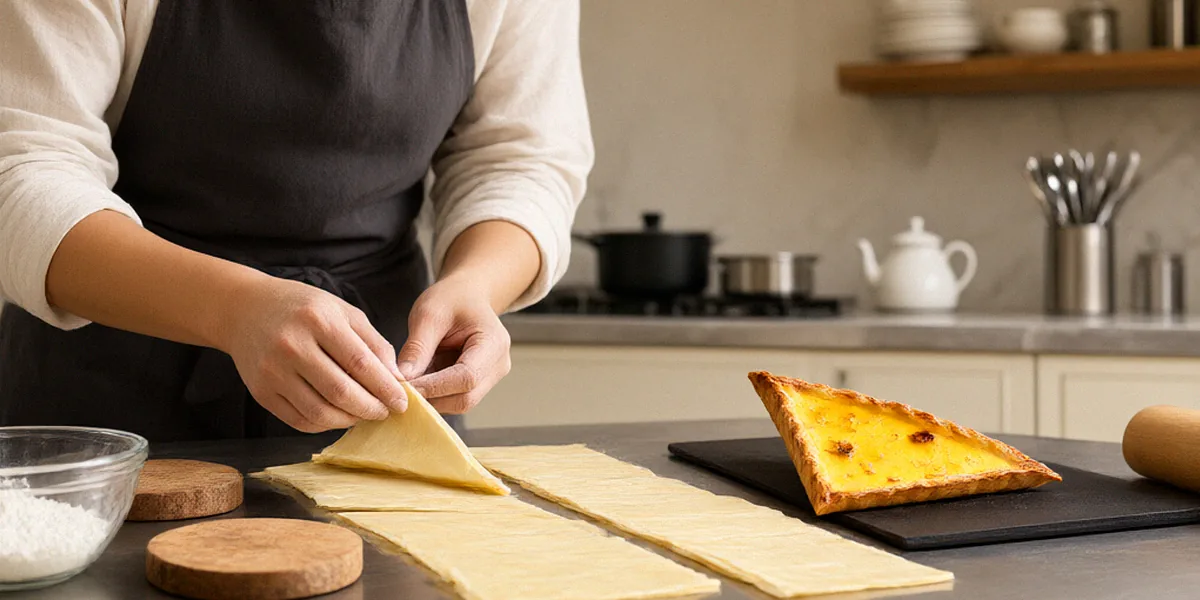
If you have watched even a handful of episodes of MasterChef Australia, you have seen it. A contestant pulls out a block of butter that has gone soft, tries to fold it into dough, and the whole thing turns into a greasy, streaky mess. The judges wince. Someone gets penalised for warm hands. Someone else gets praised for having the foresight to chill their dough between folds. This is not manufactured drama. Temperature control is arguably the single most important variable in pastry, and TV shows hammer the point home in a way that a recipe’s line of “chill for 30 minutes” never quite manages.
Why cold butter makes flaky pastry
Flaky pastry depends on layers. When you roll cold butter into dough and fold it repeatedly, you create thin alternating sheets of fat and dough. When that goes into a hot oven, the water in the butter turns to steam, pushing the layers apart before the fat melts and the structure sets. If the butter is too warm, it blends into the dough instead of staying in distinct sheets, and you end up with something closer to a biscuit than a proper flaky tart shell. The shows demonstrate this visually, and that visual memory is powerful when you are standing at your own bench.
The fridge is your best pastry tool
We love that TV contestants are constantly running back and forth to the fridge. It reinforces a habit that home bakers often skip: rest and chill at every stage. Dough that has been rested is easier to roll, shrinks less in the oven, and holds its shape. Butter that has been re-chilled between folds stays distinct. If you take one thing from a pastry episode, let it be this. Your fridge is not a pause button. It is an active tool in the process.
They Make Tempering Chocolate Look Achievable
Tempering chocolate used to feel like a professional-only skill until we watched it demonstrated on the Great Australian Bake Off. Contestants spread chocolate across a marble slab, work it with a scraper, and bring it back to temperature with a digital thermometer. Suddenly it looked less like wizardry and more like a technique you could practise on a Saturday afternoon. The seeding method they typically show is especially reliable for home bakers.
The seeding method explained simply
The idea is straightforward. You melt about two-thirds of your chocolate gently, then remove it from the heat and stir in the remaining third, chopped finely. The unmelted chocolate seeds the melted mass with stable crystals, bringing the whole batch down to a workable temper as it melts. For home bakers, we recommend starting with a good couverture such as Callebaut or Nestlé Plaistowe couverture chocolate, because these have consistent cocoa butter content and behave predictably. Compound chocolate, which contains vegetable fat instead of cocoa butter, will set without tempering but will never give you that proper gloss and snap.
Reading the temper: shine and snap
Once tempered, chocolate should look glossy, not streaky or dull. It should set firm at room temperature within a few minutes and snap cleanly when broken. If your chocolate is streaky or soft, it has not tempered correctly, and you can usually rescue it by adding more seed chocolate and stirring again. TV shows often show the “dip a knife and wait” test, which is a good habit to copy.
They Champion Blind Baking for Tarts
Australian cooking shows repeatedly demonstrate blind baking, and for good reason. A tart shell that has not been blind baked will often develop a soggy base, especially when filled with a wet custard. We see this demonstrated on everything from MasterChef Australia to the Great Australian Bake Off, and it has probably saved more home bakers’ lemon tarts than any single piece of advice.
Weights, paper, and docking
The method is simple. Line your chilled pastry case with baking paper, fill it with ceramic beads, dried rice, or dried beans, and bake. Before lining, prick the base lightly with a fork, a process called docking, to release steam and prevent the pastry from puffing up. The weights hold the sides and base in place while the pastry sets.
When to remove your weights
Most recipes call for removing the weights partway through baking and returning the shell to the oven to dry out and colour. This is the step that separates a pale, underdone base from a properly crisp one. It matters for classic tarts like a lemon tart, and it matters just as much for the Portuguese custard tarts that have become so popular in bakeries across Sydney and Melbourne. Those blistered, caramelised tops only work on a fully baked shell.
They Model Good Pastry Habits Under Pressure
One of the unexpected benefits of watching MasterChef Australia is seeing how contestants organise themselves. The ones who succeed are rarely the ones with the fanciest equipment. They are the ones who set out their ingredients, work calmly, and handle their dough gently. These habits matter more than any gadget.
Mise en place for pastry
Mise en place means having everything in its place before you start. For pastry, that means butter cubed and chilled, flour weighed, water iced, eggs cracked into a bowl, and your bench cleared. It sounds fussy, but it prevents the frantic mid-recipe scramble that leads to warm butter and overworked dough.
Gentle handling and resting dough
Pastry does not respond well to force. Pressing, stretching, and kneading develop gluten, which makes dough tough and causes shrinkage. Handle it lightly, roll in one direction where you can, and rest it in the fridge whenever it starts to feel soft. You do not need specialty flour for this. Everyday Australian supermarket flour such as Lighthouse or Wallaby works perfectly well when handled with care.
Where TV Shows Fall Short for Home Bakers
We love the entertainment, and we genuinely learn from it. But TV cooking shows are made for cameras, not for our kitchens. They skip the boring variables: the humidity in a Brisbane summer, the calibration of your oven, the way your bench feels on a hot day. These are the things that actually determine whether your pastry works.
The humidity factor in Australian kitchens
If you have ever tried to make croissant dough in a humid Australian kitchen, you know the struggle. High humidity makes dough sticky, softens butter quickly, and slows the setting of tempered chocolate. TV shows rarely mention this. Our advice is to work in the coolest part of the day, chill your bench tools, and add liquid sparingly.
Fan-forced oven adjustments
Most Australian home kitchens have fan-forced ovens, and they run hotter and drier than the conventional ovens often used on set. A recipe that says 200°C may need to be dropped to around 180°C in a fan-forced oven. This is one of the biggest gaps between what TV shows demonstrate and what actually happens in our kitchens.
- Reduce the stated temperature by roughly 20°C when using fan-forced.
- Check your bakes earlier than the recipe suggests.
- Rotate trays if your oven has hot spots.
- Use an oven thermometer to confirm actual temperature.
FAQ
Do I need professional equipment to follow TV pastry techniques?
No. A rolling pin, a digital thermometer, baking paper, and a well-chilled fridge will get you through almost every technique shown on MasterChef Australia or the Great Australian Bake Off. Fancy marble slabs help for tempering chocolate, but a cool bench and a scraper work fine for home quantities.
Which chocolate should I use for tempering at home?
We recommend a couverture such as Callebaut or Nestlé Plaistowe couverture chocolate. These have consistent cocoa butter content and temper predictably, which makes the seeding method much easier to master.
Why does my pastry shrink in the tin?
Shrinking usually comes from overworking the dough or not resting it long enough. Handle the dough gently, chill it thoroughly before baking, and avoid stretching it when lining the tin.
Can I use plain supermarket flour for pastry?
Absolutely. Lighthouse or Wallaby flour works well for tarts, shortcrust, and rough puff. The technique matters far more than the brand.
How do I adjust recipes for a fan-forced oven?
Drop the temperature by around 20°C and start checking your bake earlier than the recipe suggests. An oven thermometer is a small investment that will improve your pastry immediately.
TV cooking shows have done Australian home bakers a real favour. They have made pastry technique visible, demonstrated the importance of temperature and timing, and shown us that tempering chocolate and blind baking tarts are within reach. But the shows are a starting point, not a manual. Take the lessons, then adapt them to your own kitchen, your own oven, and your own ingredients. That is where the real learning happens.